Weatherproofing the Herd: Keeping Our Goats Cozy All Year Long
Why Goats and Rain Just Don’t Mix
When it comes to weather, keeping precious things protected is essential. You wouldn’t leave important papers outside to be soaked by rain or faded by the sun until the ink disappears. Goats are no different. They need protection from rain, sun, snow, and everything in between.
You would think goats wouldn’t mind the rain. After all, horses, sheep, cows, and most other farm animals spend time in it, right?
Wrong.
Goats are like little divas when it comes to rain. As soon as it starts raining, snowing, or sleeting, they run for cover. And honestly? There’s a good reason. A goat’s coat doesn’t contain the same oily, water-resistant layer that some other livestock have. When goats get wet, they can become chilled, which can lead to hypothermia, pneumonia, and other health issues.
According to livestock extension resources, goats are particularly sensitive to prolonged damp conditions. These conditions can lead to cold stress and health problems. You can read more about managing cold stress in goats during wet weather. Here is more information: Cold Stress in Small Ruminants During Wet Weather.
https://www.aces.edu/blog/topics/animals-urban/cold-stress-in-small-ruminants-during-wet-weather/
Building Their First Goat House
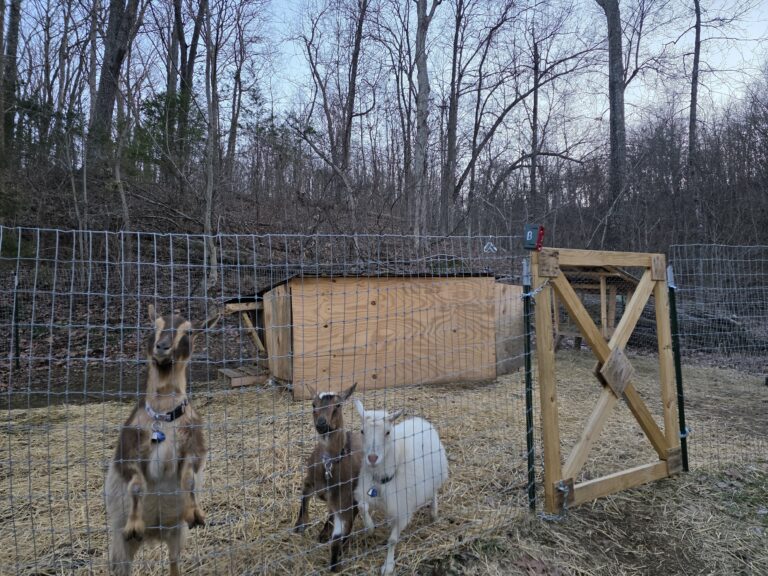
It was late summer when we purchased our goats, so temperature were still warm. We built their first shelter out of pallets. The house has a slanted roof and three exterior walls, leaving the front open.
The open design allowed for airflow and shade while still protecting them from rain and harsh sun. They absolutely love laying inside where they can see everything going on. Goats are incredibly curious – I’d say just as curious as cats, if not more.
As my husband worked on additions to the house, they stayed right in the middle of everything. They inspected each tool and board. It was as if they were the project managers.
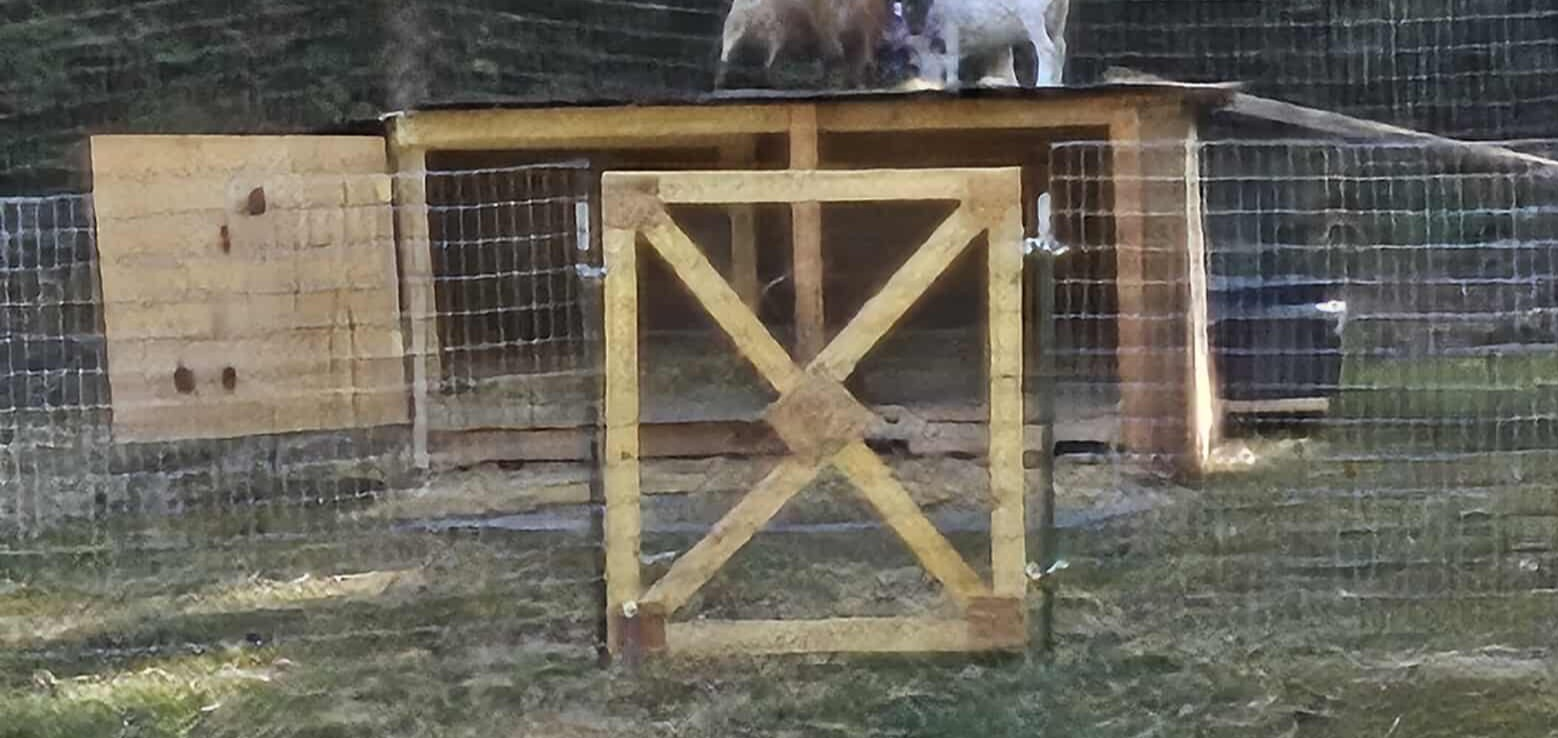
When we first brought them home, there were no doors or fencing on the open front. We later added a fence panel across the front and doors to the side openings. This allowed us to secure them at night if needed for predator protection. We attached the fence panel using hooks at the top and bottom, making it easy to open and close.
Protecting Them from Predators
We do have coyotes in the area, although they typically don’t come close to the house. Still, we wanted peace of mind. We don’t have livestock guardian dogs or other protective animals. Thus, we purchased motion-activated alarms with high decibel sound to deter predators.
We installed alarms on each post. They can run 24/7 or only at night. We initially kept them on all the time but later switched them to nighttime only. They are battery-operated, so we didn’t need to run electricity out to the pen. We also purchased extra alarms so we can rotate batteries and keep continuous protection.
Orientation and Winter Adjustments
Face the opening south or southeast when setting up a goat shelter. This positioning avoids harsh winter winds. Where we live, the hills cause the wind to shift directions often, but it rarely blows from the east.
Our shelter faces north. When the winter arrived, we added a board across the front. We also closed off the east-facing side door. The back of the house faces south. We could add a door there. But, it would be too short. This would make cleaning and adding straw difficult.
Proper ventilation is important – you want airflow without creating drafts.
The Deep Bedding Method
To keep the goats warm, we practice the deep bedding method. Every few days, we add fresh straw over damp bedding and manure. The lower layers gradually break down and start composting, creating natural warmth. The fresh straw on top provides a dry, clean surface for the goats. You can read more on deep bedding with Michigan State Extension.
https://www.canr.msu.edu/news/preparing_goats_and_sheep_for_winter_weather
In the spring, we remove all bedding and give the shelter a thorough cleaning.
Looking Ahead to Texas
When we move to Texas, the goats will have a full barn. We will continue using the deep bedding method but plan to add electric fencing for extra protection. Our land there is more rural and has a higher coyote population. The fencing will help during the day, and we plan to lock them safely in the barn each night.
Curious Creatures
We’re looking forward to removing the winter boards so they can once again enjoy their full view of the yard. Right now, when something catches their attention, one little head pops out… then two… then three.
Goats are such curious, entertaining creatures.
We truly hope this information either helps you or simply brings a smile to your face. Feel free to leave a comment or share your own goat stories.
Until next time – we hope every day is a goat day for you! 🐐